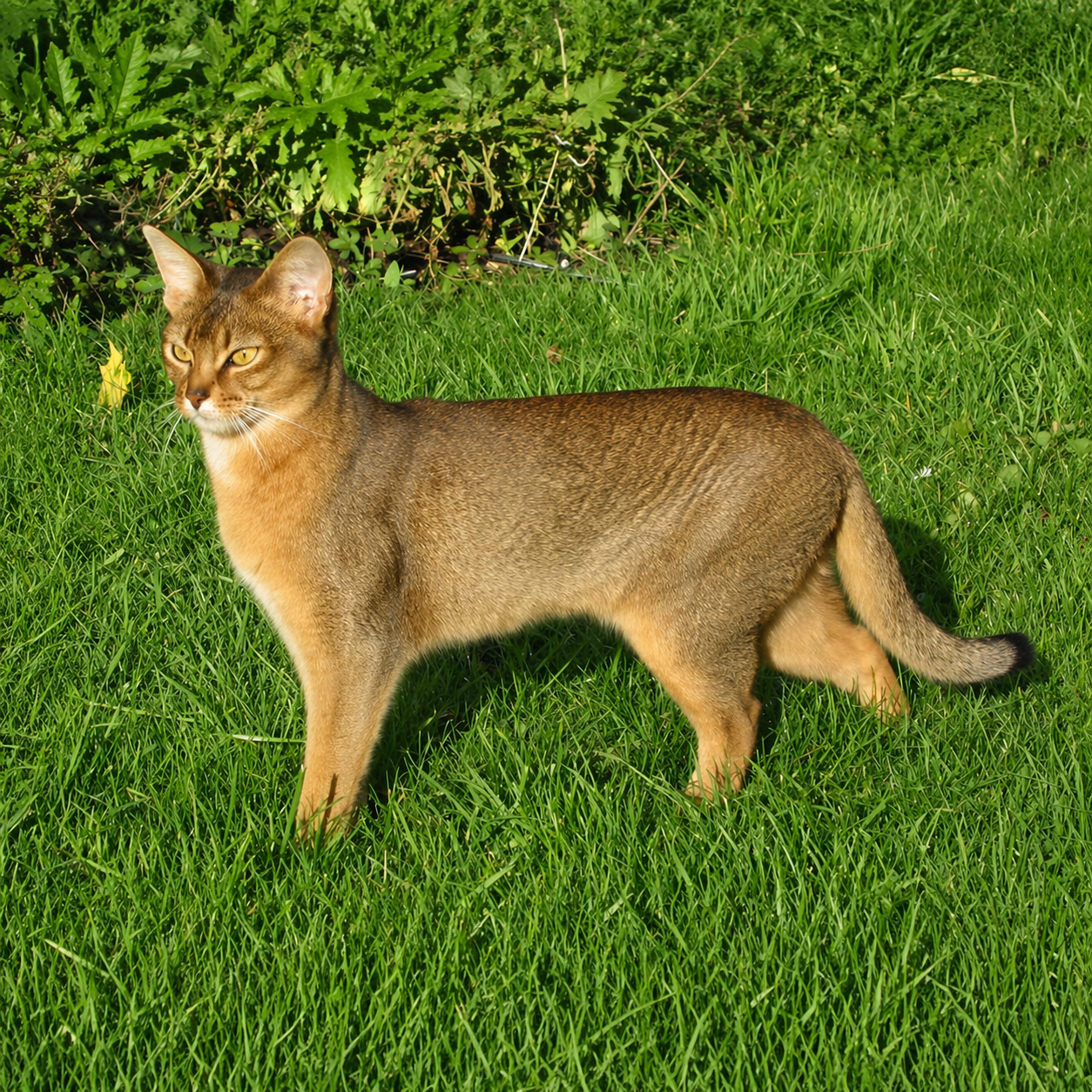
👁️ Looks
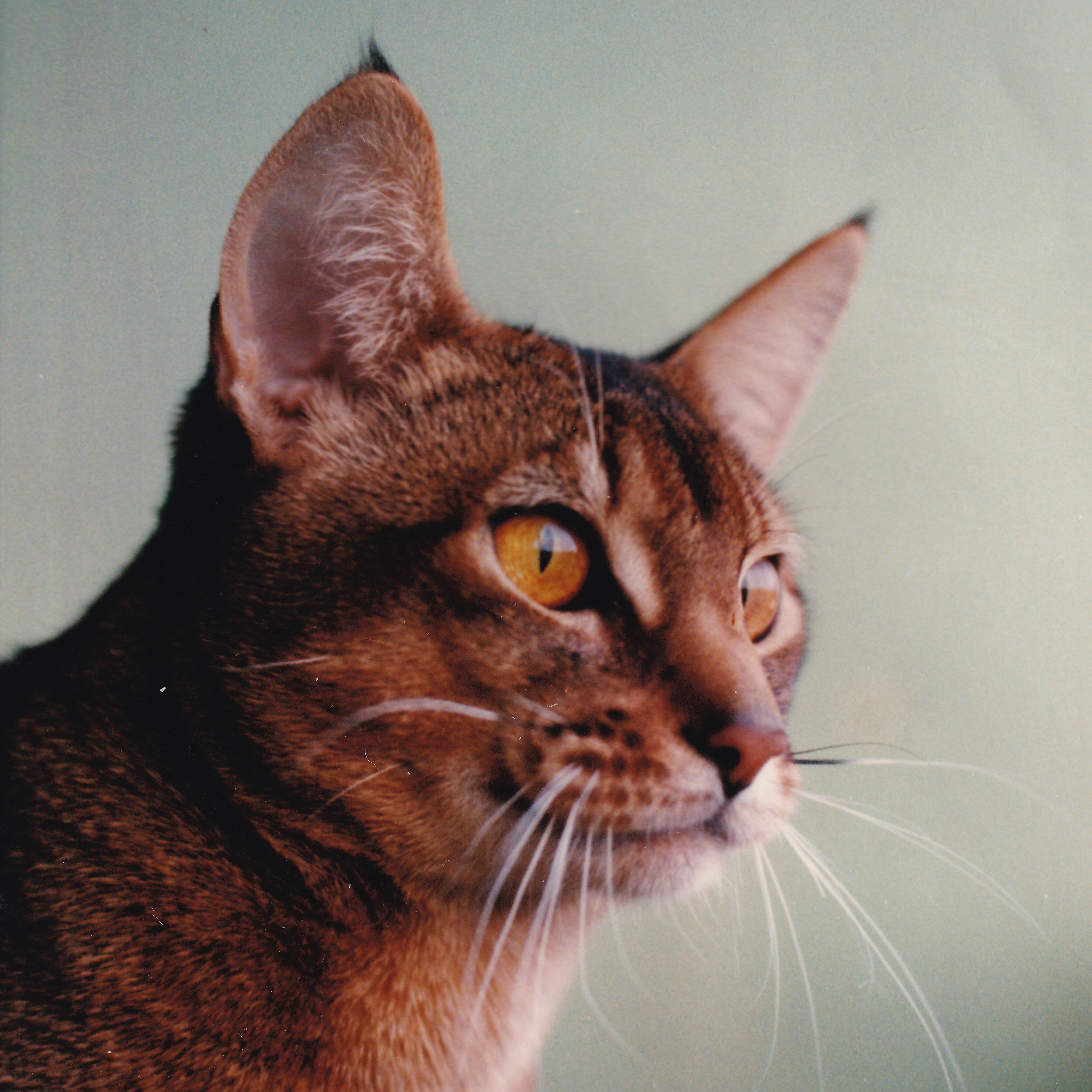
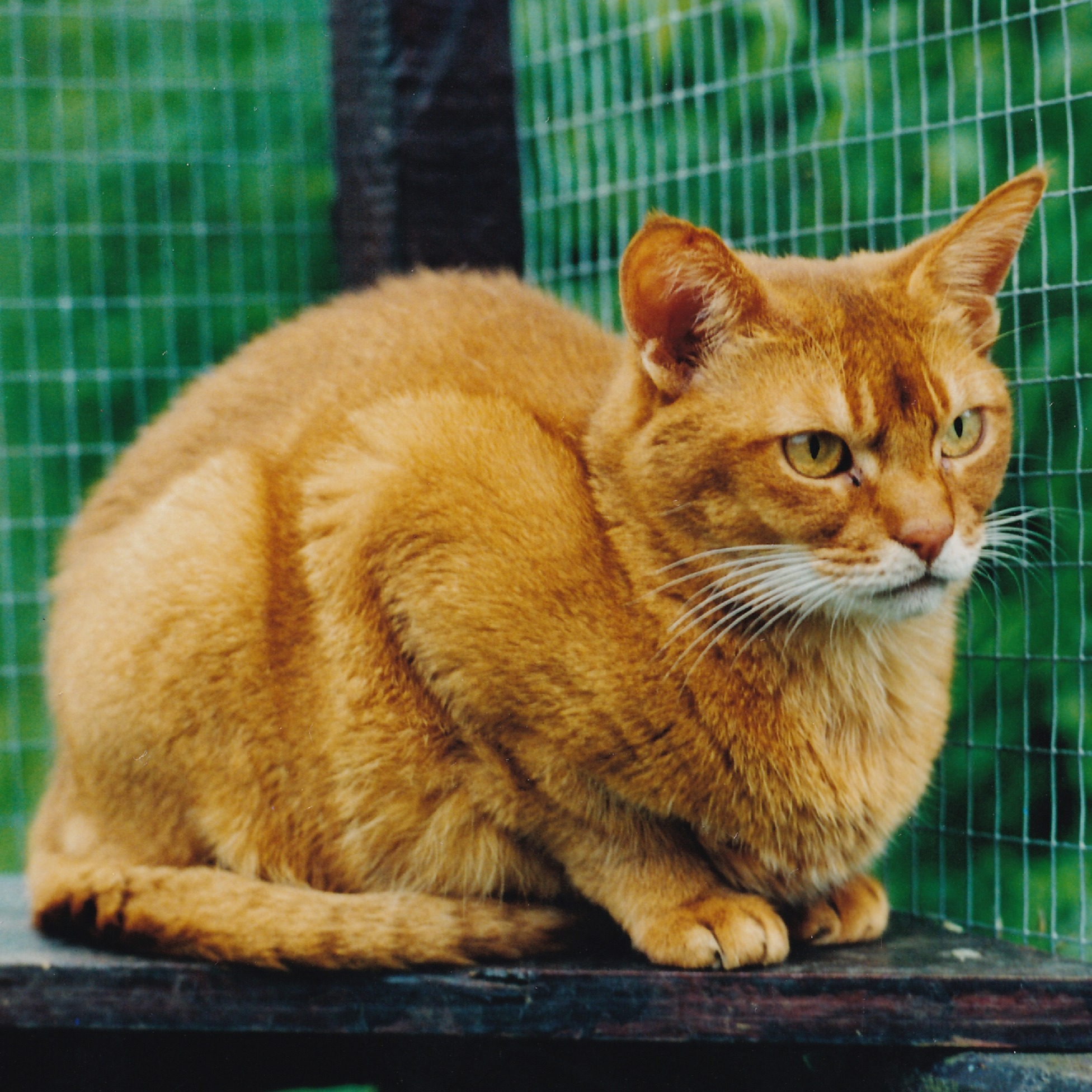
The Aby is a regal cat, and knows his or her place — at the top of the hierarchy (you are one down from that!). A well-bred cat will sit upright, with their tail curling neatly around the base of their body, keeping the toes warm. The cat should always be striking in appearance.
For some Abyssinian breeders, there is only one colour — known variously as Usual (UK), Ruddy (USA) or Tawny (Australia) — this was the only colour recognised for many years. Many more colours are now accepted, depending upon the country and registration body concerned.
The Aby is a medium sized cat, of 'Foreign' type, but the type and colouration of show cats can vary noticeably between countries.
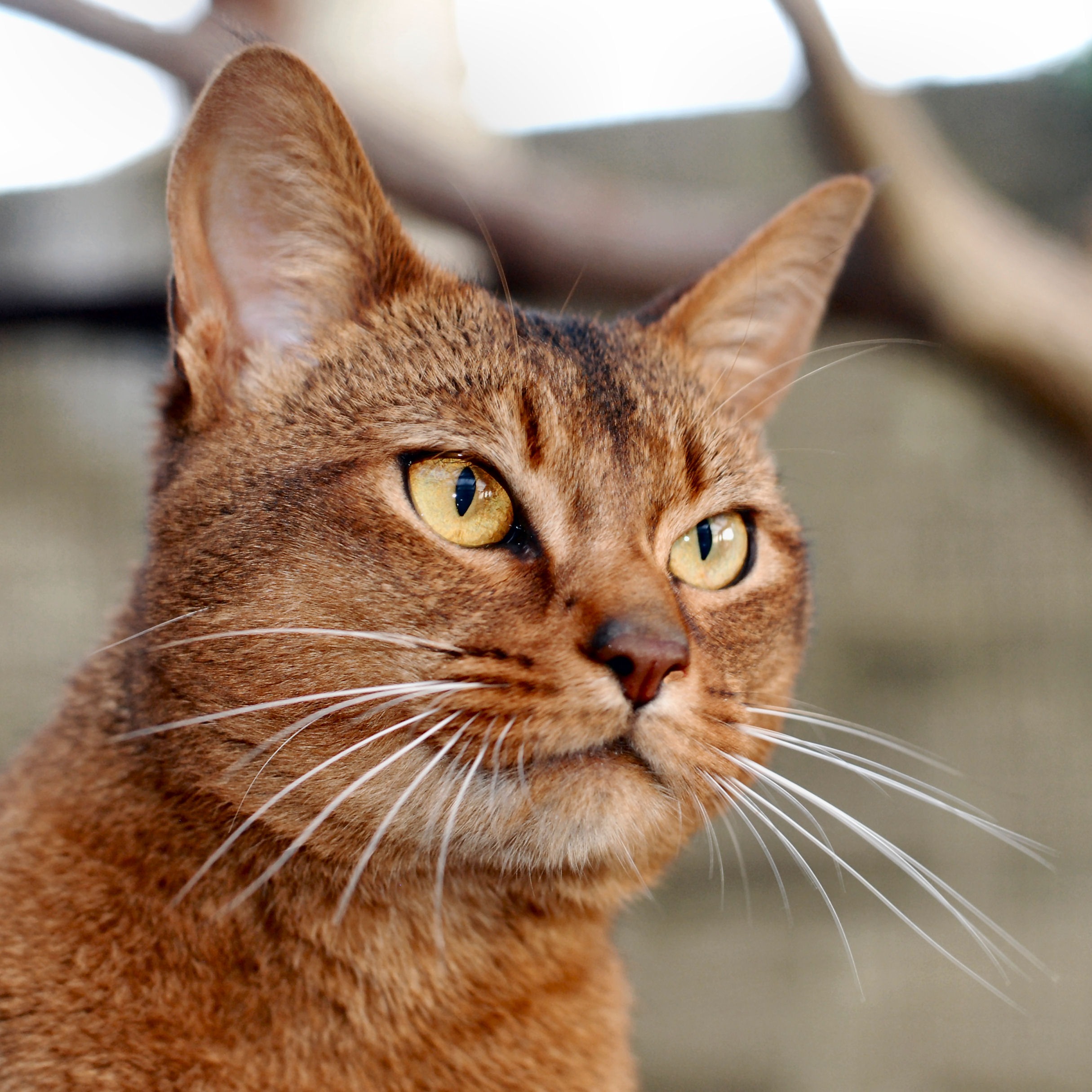
😸 Personality
The typical Aby is an alert and intelligent cat who loves the company of people, but often finds the company of other cats less than ideal — they can be quite jealous of your affections! In a multi-breed household they are likely to claw their way to the top!
They like being the centre of attention, but are not overly loud — sometimes miaowing but rarely chatty. They do have a special trilling miaow, often reserved for playtime. They have the knack of leaving a tail draped down across the TV or monitor screen, and most will retrieve paper balls or furry mice if you throw them in play. The concept of sharing is not understood, however.
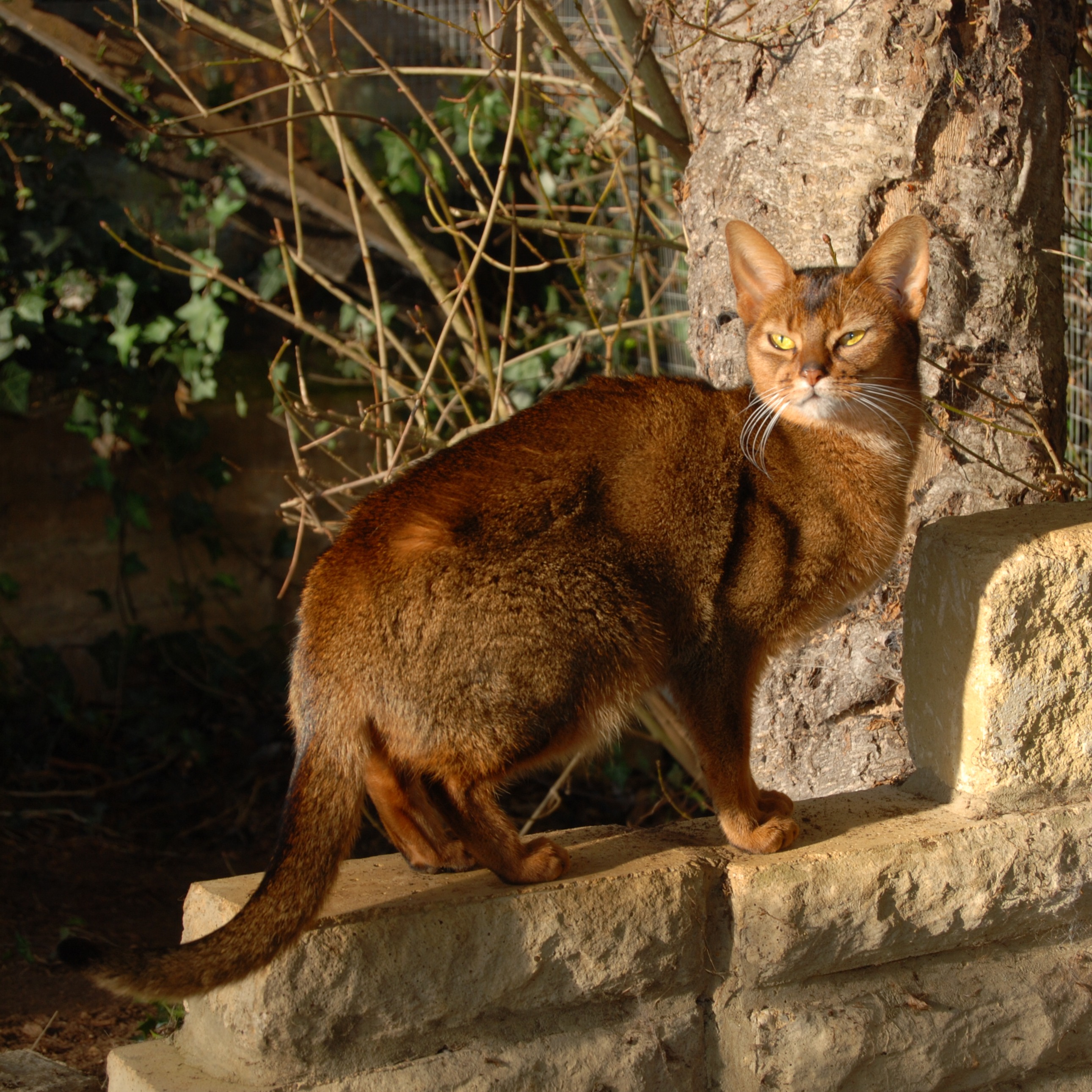
🧠 Intelligence
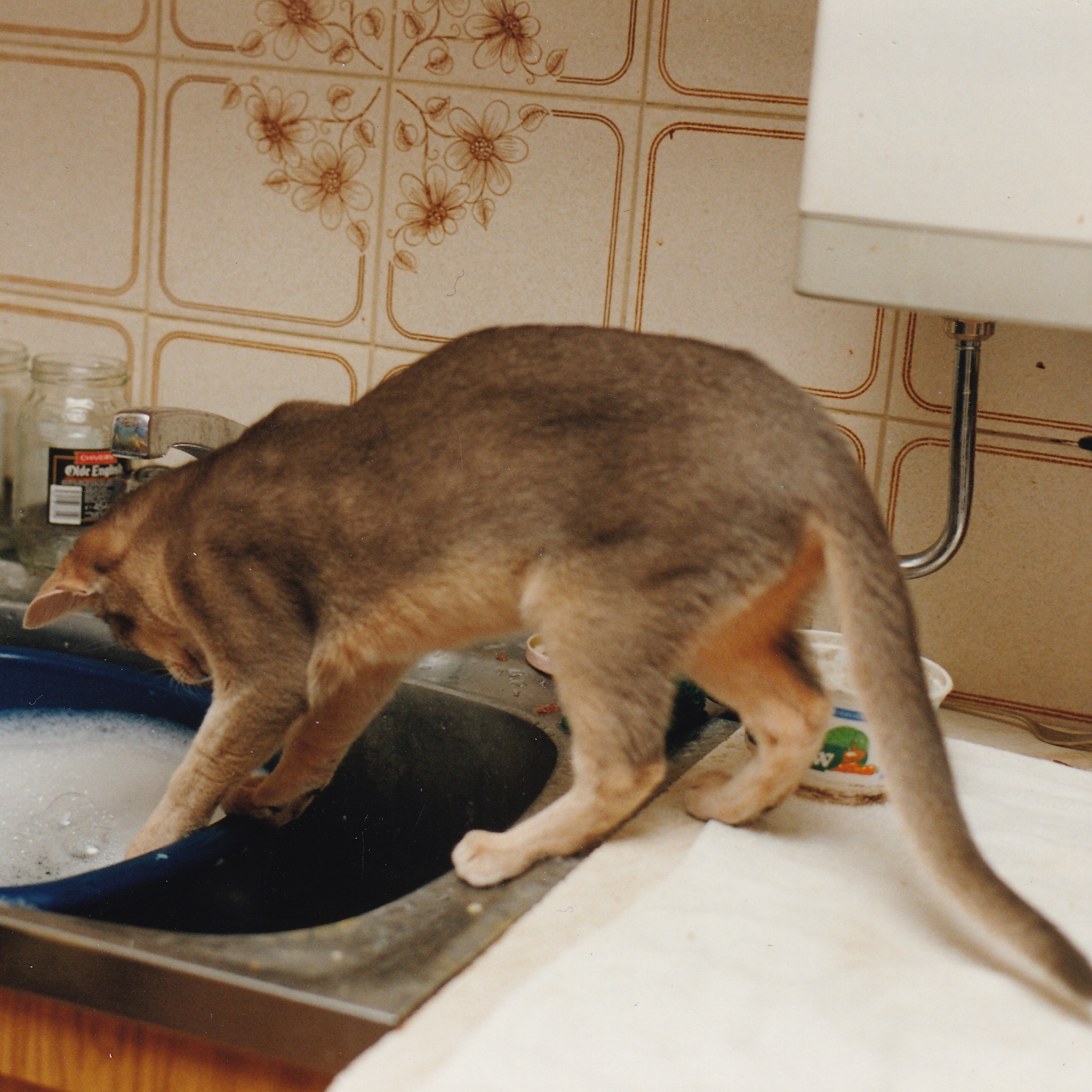
Smarter than the average cat, most figure out door handles pretty quickly, and nearly all are expert in the art of theft — not necessarily silently, however. Some Abys will sit and watch you intently performing tasks such as operating a cupboard or door latch, then attempt to replicate the task when they think you're not watching.
Most Aby breeders have to replace standard door handles with 'cat-proof' equivalents.
🏅 Show Cats
Abyssinians have been shown competitively since the late 19th century and remain a popular show cat worldwide. The standard varies between countries and registration bodies, but the hallmarks of a good show Aby — the ticked coat, the large alert ears, the lean muscular body and the expressive eyes — are universally admired.
The ticking itself is a key feature: each individual hair carries alternating bands of colour, giving the coat a warm, glowing quality that photographs beautifully and catches the light in real life.
🎨 Colours
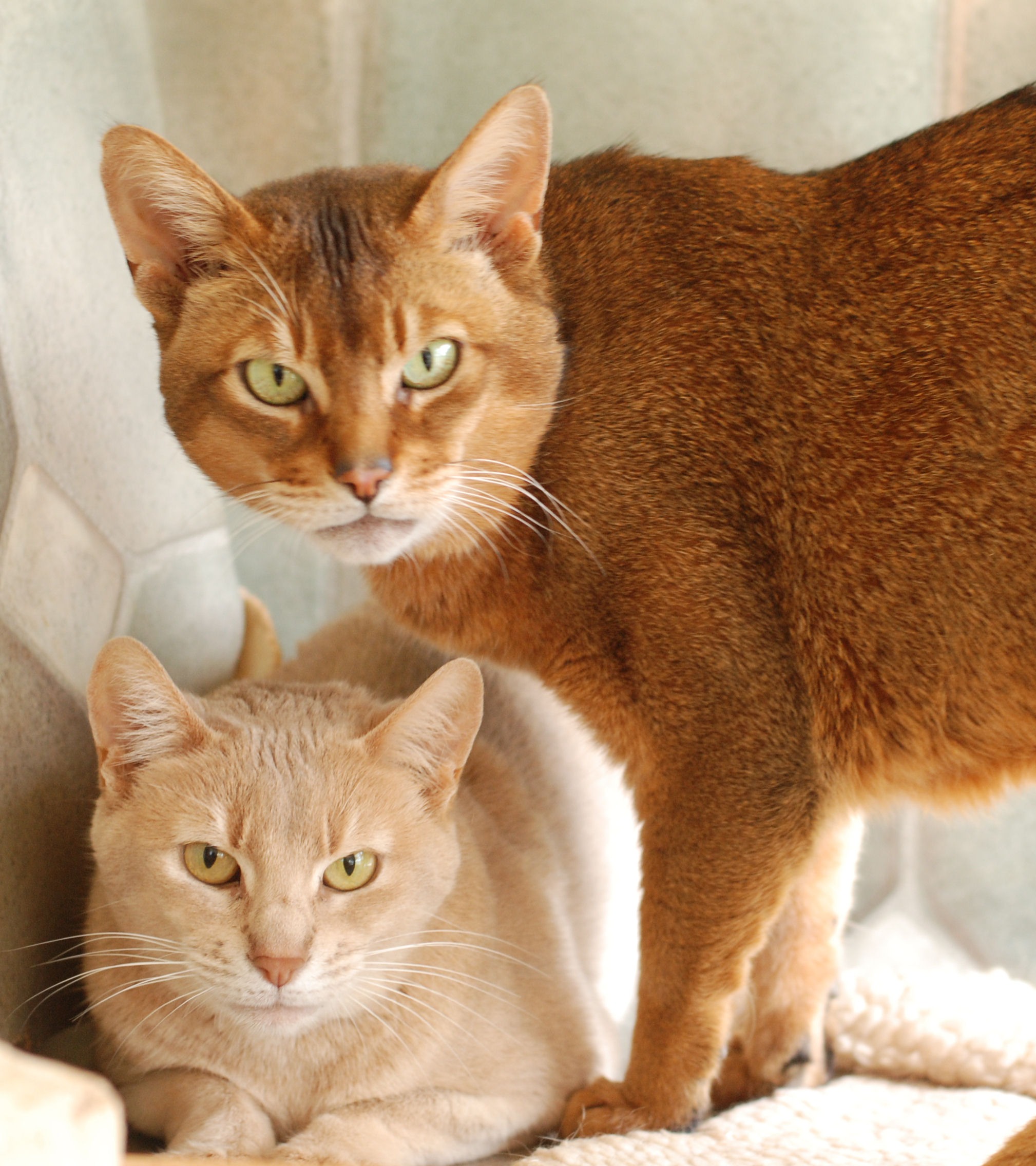
The Abyssinian is recognised in a growing range of colours. The most widely accepted include:
Usual / Ruddy / Tawny — the original warm golden-brown with
black ticking, the colour most people associate with the breed.
Sorrel / Red — a warm coppery-red with chocolate ticking, often
described as the most eye-catching of the colours.
Blue — a cool blue-grey with deeper blue ticking and a warm
fawn undertone.
Fawn — a pale warm cream with deeper fawn ticking.
Chocolate — a rich warm brown with darker chocolate ticking.
Lilac / Lavender — a pale pinkish-grey with warmer ticking.
Silver variants exist in several of these colours, where the base of each hair is white rather than warm, producing a sparkling, contrasting effect.
🌍 Origins
The precise origins of the Abyssinian are a matter of some debate. The name suggests Ethiopia (formerly Abyssinia), and early records show cats of this type being brought to Britain from that region in the late 1860s. However, genetic research suggests the breed may have originated closer to the coast of the Indian Ocean, and some authorities believe the breed was developed primarily in Britain from cats of this general type.
Whatever the true origins, the breed has been selectively developed over more than 150 years and is now one of the most widely kept pedigree breeds in the world.
🏠 Living with an Aby
Abyssinians are not the cat for someone who wants a quiet, independent companion. They want to be involved in everything you do. They will follow you from room to room, supervise your cooking, sit on your keyboard, and generally ensure that no task is completed without their input.
They are active cats and benefit from space to run and climb. A tall scratching post or cat tree is essential — they love to survey their territory from a height. They are generally good with children and dogs, provided introductions are handled carefully. Two Abys often get along better than one Aby and a cat of another breed, though individual temperaments vary.